Home / RESEARCH & ACADEMICS
Research & Academics
02 / CURIOSITY, WITH A PURPOSE
Questions become
a way to care.
I explore the connections between the brain,
the body, and how we feel.
From a first experiment to an independent study, I follow questions that connect scientific curiosity with the lives of people around me.
NEUROSCIENCE / PSYCHOLOGY / BIOMEDICINE
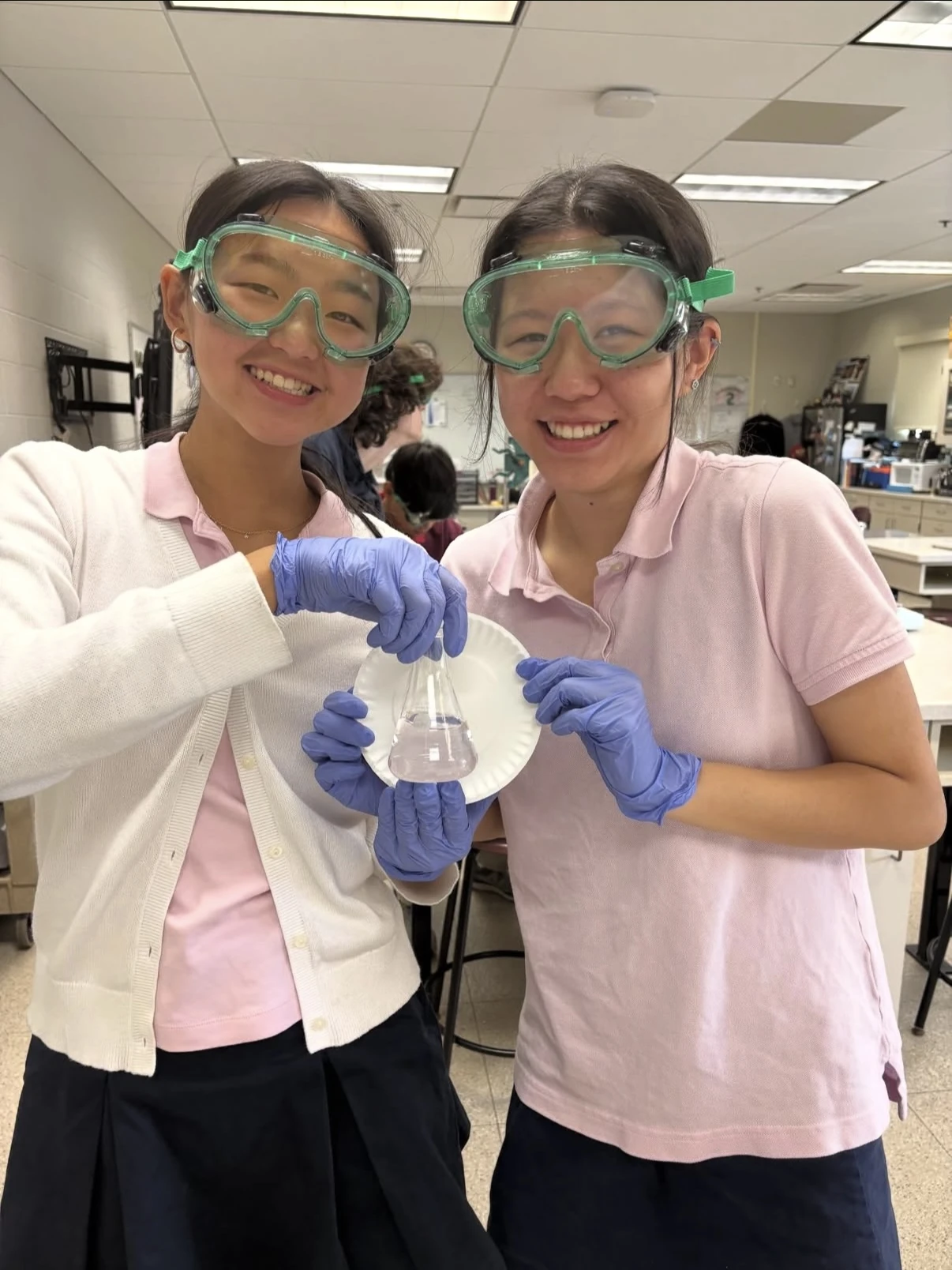
AT THE LAB BENCH / LEARNING TOGETHER
01 / WHERE THE QUESTIONS BEGIN
The brain is more than
a subject to me.
Curiosity starts close to home.
My interest began with hands-on science: examining cells, running gels, performing dissections, and learning the precision of chemistry.
Experiences in my family made questions about the brain deeply personal. Sport added another question: how does movement shape psychological resilience?
I want to understand these connections—and use what I learn to help others.
02 / SELECTED PUBLICATIONS
Two papers.
Questions made visible.
Abstracts, methods, and data at a glance. Open each paper to read the complete original article.
01 / APPLIED & EDUCATIONAL PSYCHOLOGY · 2026
Screens, context
& adolescent behavior
The Impacts of Weekend Screen Exposure, Violent Content and Parent-Child Co-Viewing on Adolescents’ Problematic Behaviors: A Correlational Study
Zier Wang, Tianheng Zhao, Yurui Sun & Anyou Chen
ABSTRACT / CONDENSED
This cross-sectional study explored screen use, physical activity, sleep quality, and behavioral difficulties among adolescents. Fourteen valid responses were analyzed using questionnaires and Kendall’s correlations. Weekend screen time was associated with emotional symptoms; violent-content exposure with hyperactivity; and parent-child co-viewing with prosocial behavior. Physical activity scores were not significantly associated with any SDQ dimension. The findings describe correlations in a small sample, rather than causal effects.
KEYWORDS
Adolescents · Screen time · Violent media exposure
Parent-child co-viewing · Problematic behaviors
Read full paper

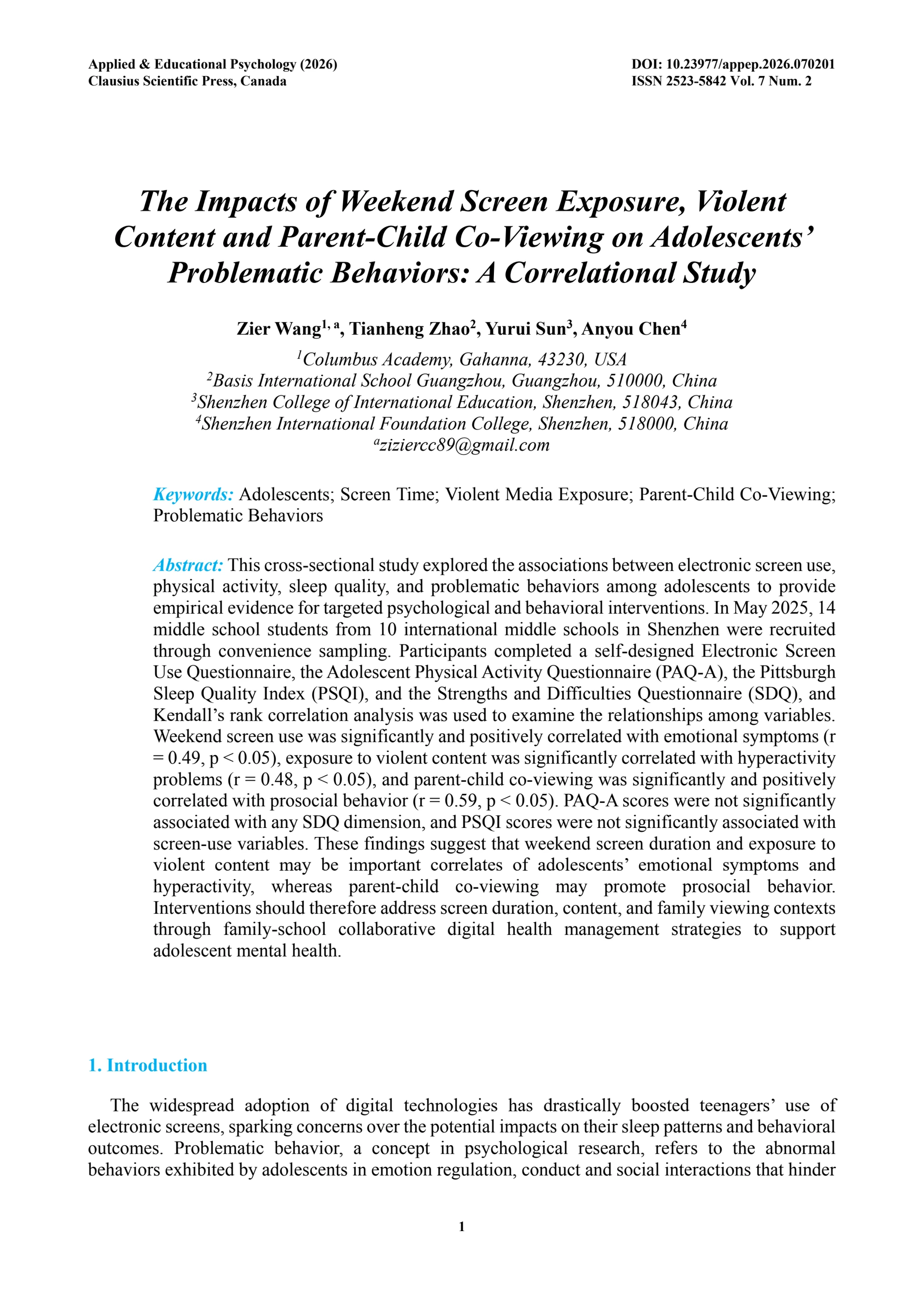
9 PAGES / ORIGINAL ARTICLE
14
valid responses · ages 13–18
Shenzhen · May 2025
METHODS
Cross-sectional survey
Screen-use questionnaire, PAQ-A, PSQI & SDQ
Kendall’s rank correlations
DATA SNAPSHOT
Reported associations: r = .49, .48, .59
Each p < .05; no causal conclusion.
Small convenience sample; limited generalizability.
02 / IMPES 2025 · PUBLISHED IN VOLUME 62, 2026
Can layout change
how we remember?
How Successfully Can Laying Out Information in Distinct Designs Induce People to Utilize Chunking and Linking Memory?
Zier Wang · Sole author
ABSTRACT / CONDENSED
This experiment investigated whether visual layouts can encourage chunking and linking strategies in short-term memory. Twelve adolescents completed word-memory tasks in PsyToolkit across chunking, linking, and random natural chunking conditions. Linear mixed-effects models assessed response time and accuracy while accounting for block effects. Linking produced slower responses than chunking, while accuracy differences between layouts were not statistically significant. The small sample, imbalanced conditions, and fatigue limit the conclusions.
KEYWORDS
Mnemonic devices · Chunking · Linking memory
Short-term memory · Layout design · Cognitive load · Adolescents
Read full paper
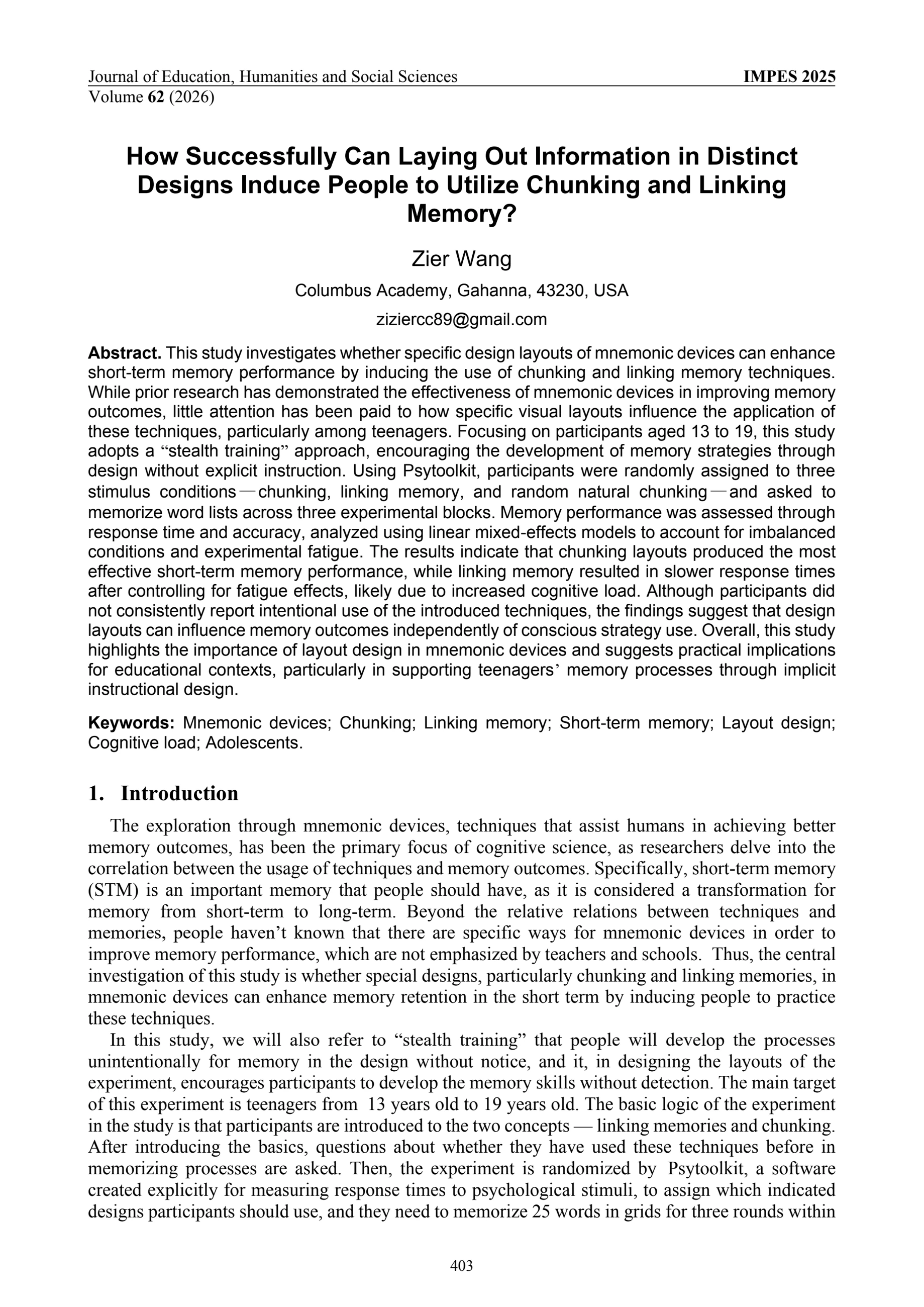
8 PAGES / ORIGINAL ARTICLE
12
participants · ages 13–19
3 experimental blocks
METHODS
Randomized sequence in PsyToolkit
Word recognition: response time & accuracy
Linear mixed-effects models
DATA SNAPSHOT
Linking vs. chunking: +196.37 ms
Reported model coefficient; p < .004.
Small sample, imbalanced conditions, and fatigue.
THE RESEARCH NOTEBOOK / 01–04
Different methods.
A shared curiosity.
01 / OHIO STATE UNIVERSITY · SUMMER 2026
Mass spectrometry & bioanalysis
ROLE / Student researcher
Exploring rapid disease detection and biomarkers in the Badu-Tawiah Research Lab through the Columbus Academy Applied Science Program.
PROCESS Paper-spray ionization, immunoassays, and experimental protocol development.
OUTPUT Formulated protocols and contributed to disease-detection bioassays.
02 / PENN ARTS & SCIENCES · SUMMER 2025
Neural circuits, from tissue to theory
ROLE / Neuroscience Research Academy participant
Connecting neuroanatomy and brain function through wet-lab dissections and dry-lab computational simulations.
PROCESS Hands-on dissections, research literature, and discussions of ethics in neurotechnology.
OUTPUT Completed lab work, literature syntheses, and peer seminars on neuroethics.
03 / MICHIGAN MATH & SCIENCE SCHOLARS · 2026
Seeing the brain in action
ROLE / Neuroimaging research participant
Studying how structural MRI, fMRI, PET, and EEG reveal different aspects of the brain.
PROCESS Compared imaging approaches and identified an unanswered research question.
OUTPUT Developed an original neuroimaging research proposal.
04 / YUANPEI YOUNG SCHOLARS · SUMMER 2025
Layout design & short-term memory
ROLE / Sole author · Outstanding Yuanpei Young Scholar
Testing chunking, linking, and natural chunking layouts with 12 adolescent participants in PsyToolkit.
PROCESS Word-recognition experiment; response time and accuracy analyzed with mixed-effects models.
OUTPUT Published in JEHSS, Vol. 62 (2026), pp. 403–410. Full paper available above.
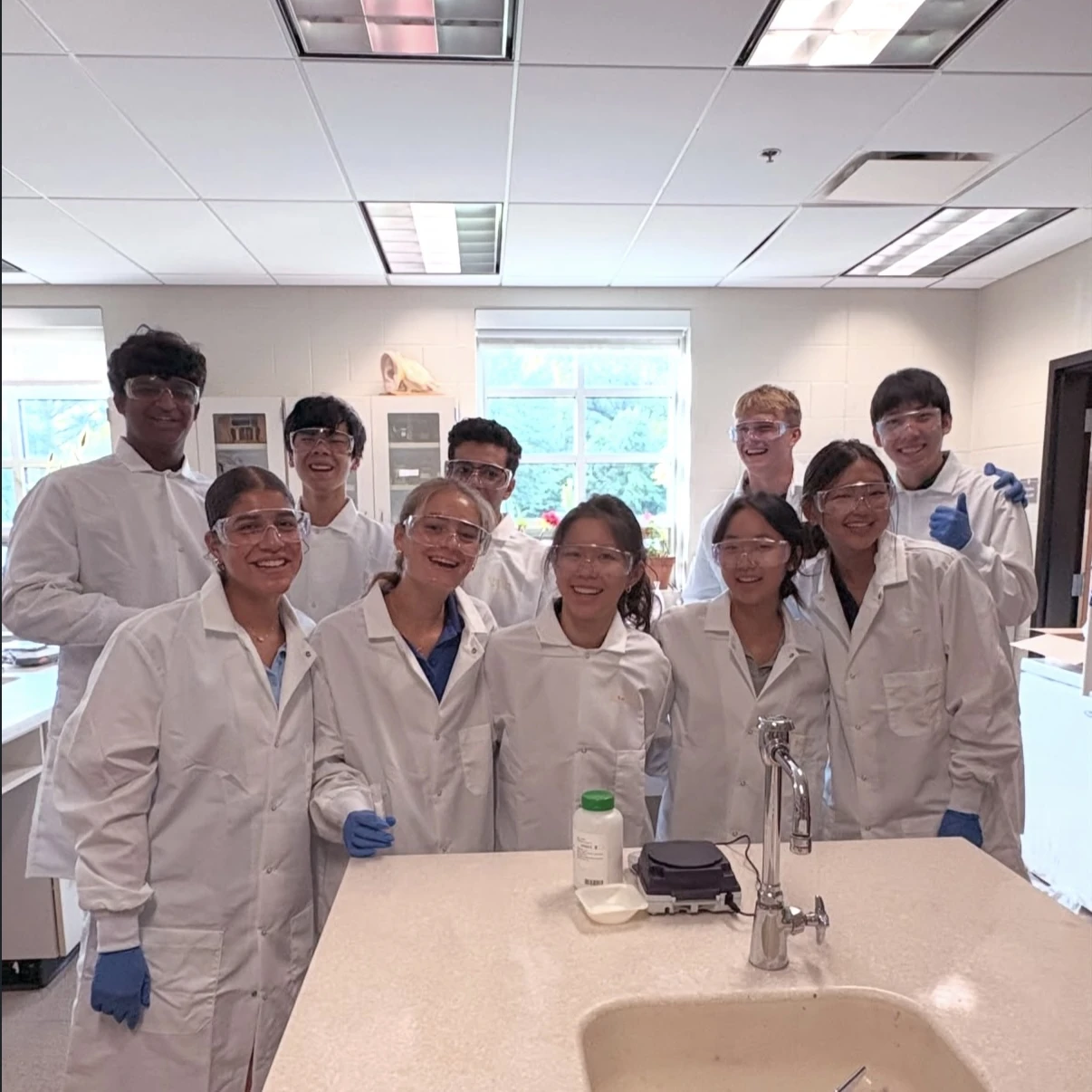
SCIENCE AS A SHARED PRACTICE
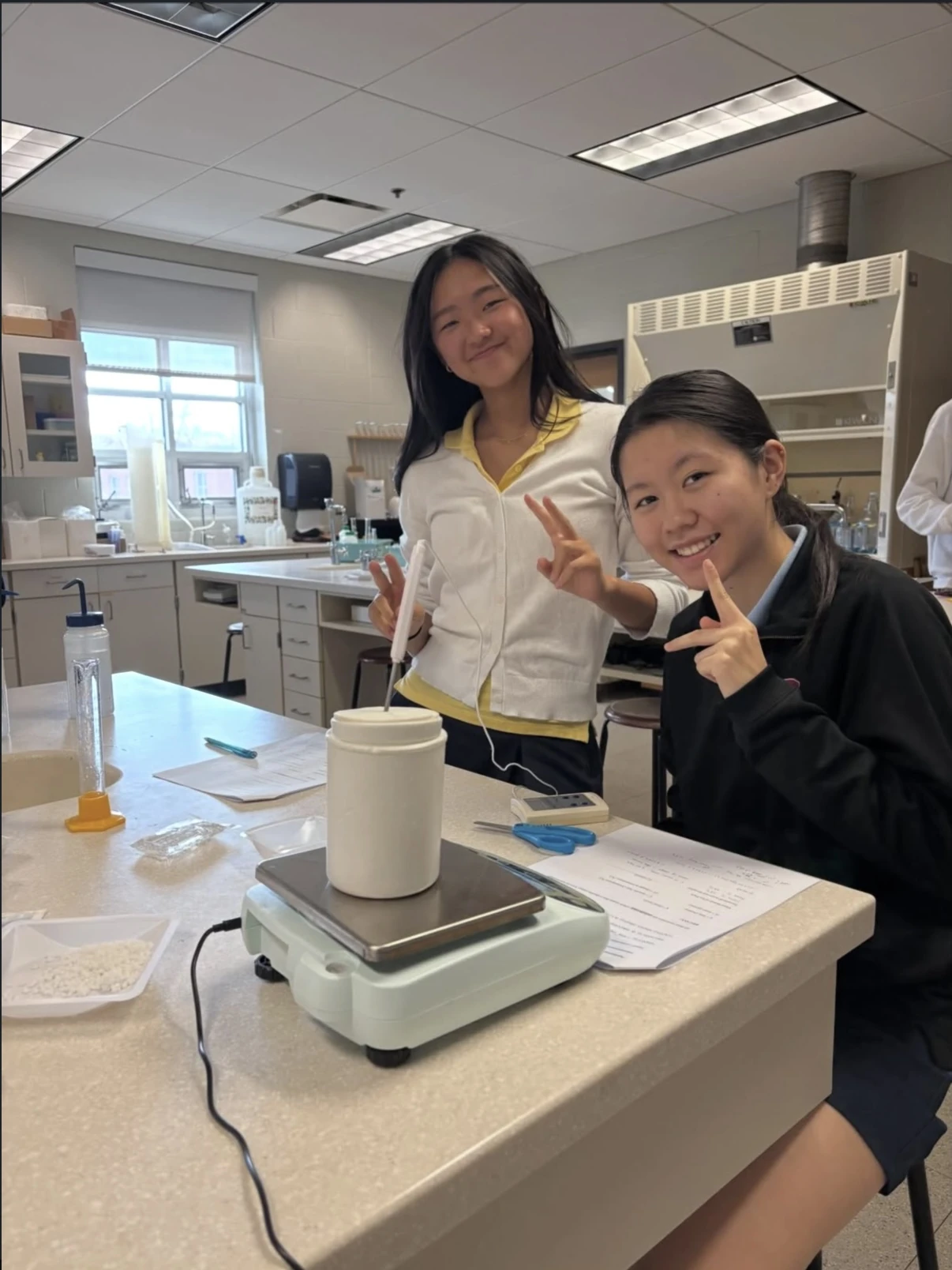
LEARNING BY DOING
Ideas grow
in company.
At the bench, a good question often begins with a conversation.
03 / LEARNING BEYOND SCHOOL
The questions keep going.
HSYLC
Sleep & mental health
A poster exploring sleep and psychological well-being.
STANFORD MATH CIRCLE
Thinking with mathematics
An additional space for mathematical curiosity and learning.
04 / ACCEPTANCE LETTERS & HONORS
The work, acknowledged.
Original acceptance letters and certificates, presented together.
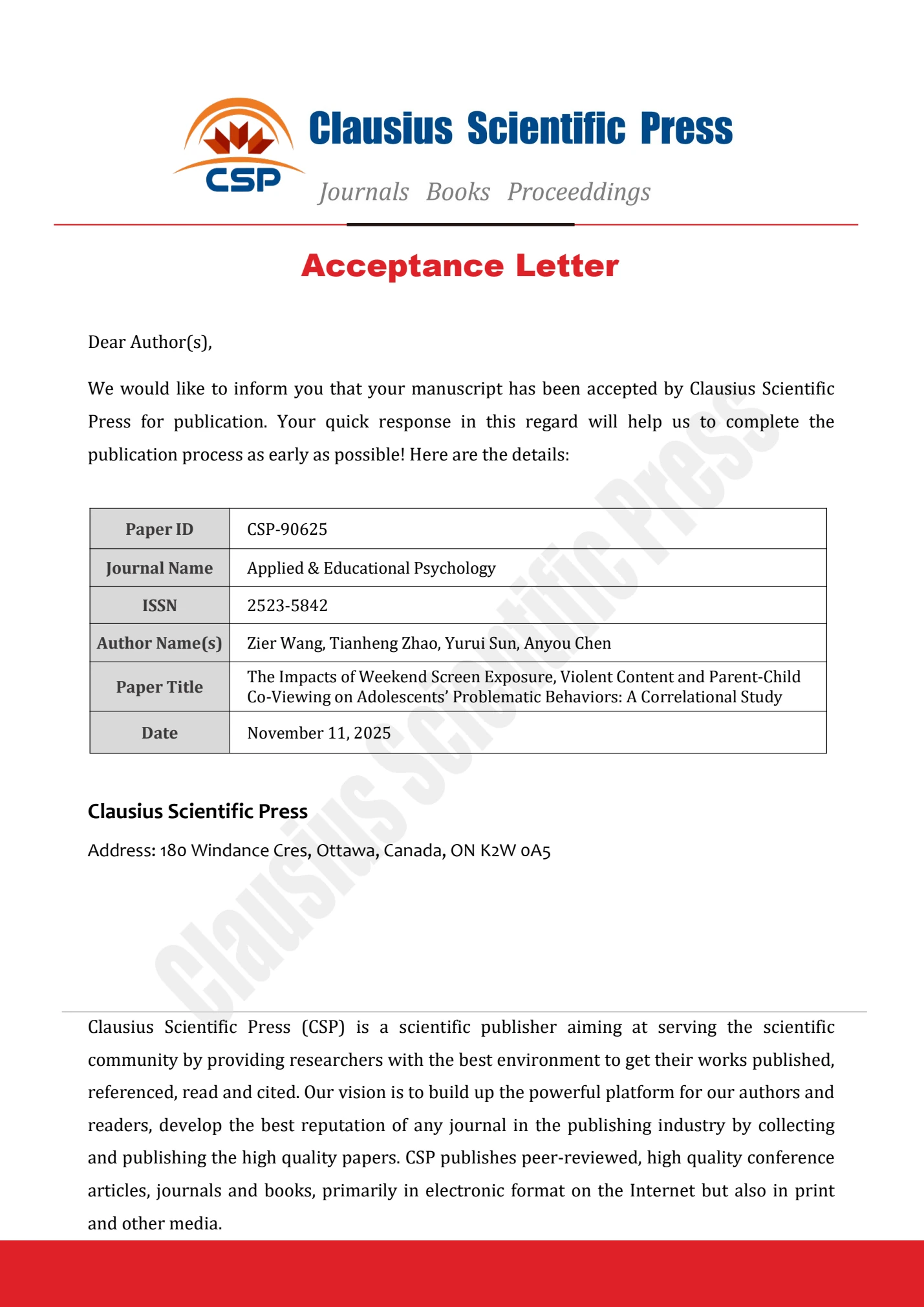
CSP acceptance letter
Applied & Educational Psychology
Manuscript CSP-90625 · 11 Nov 2025
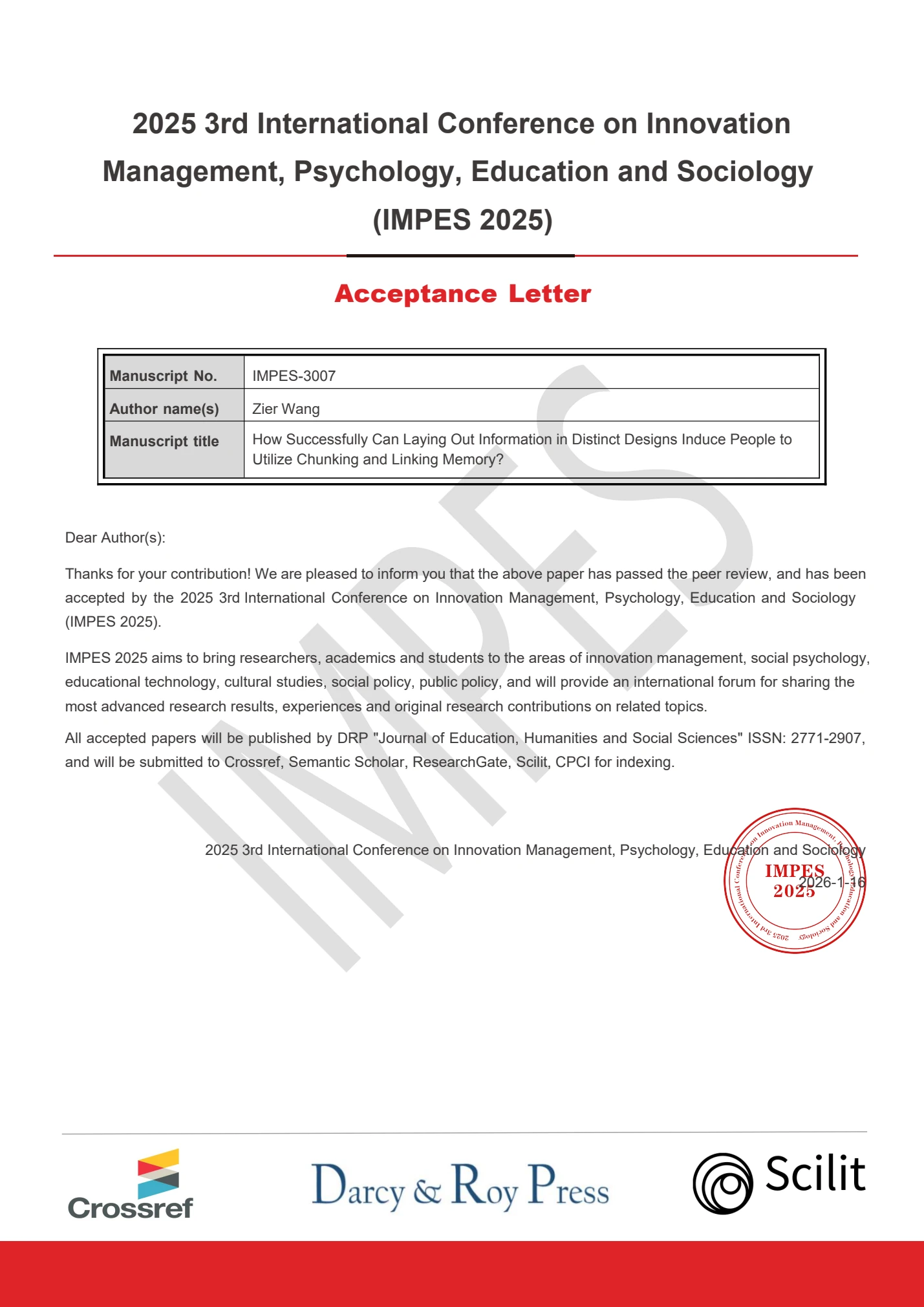
IMPES acceptance letter
Memory & layout design paper
Manuscript IMPES-3007 · 16 Jan 2026
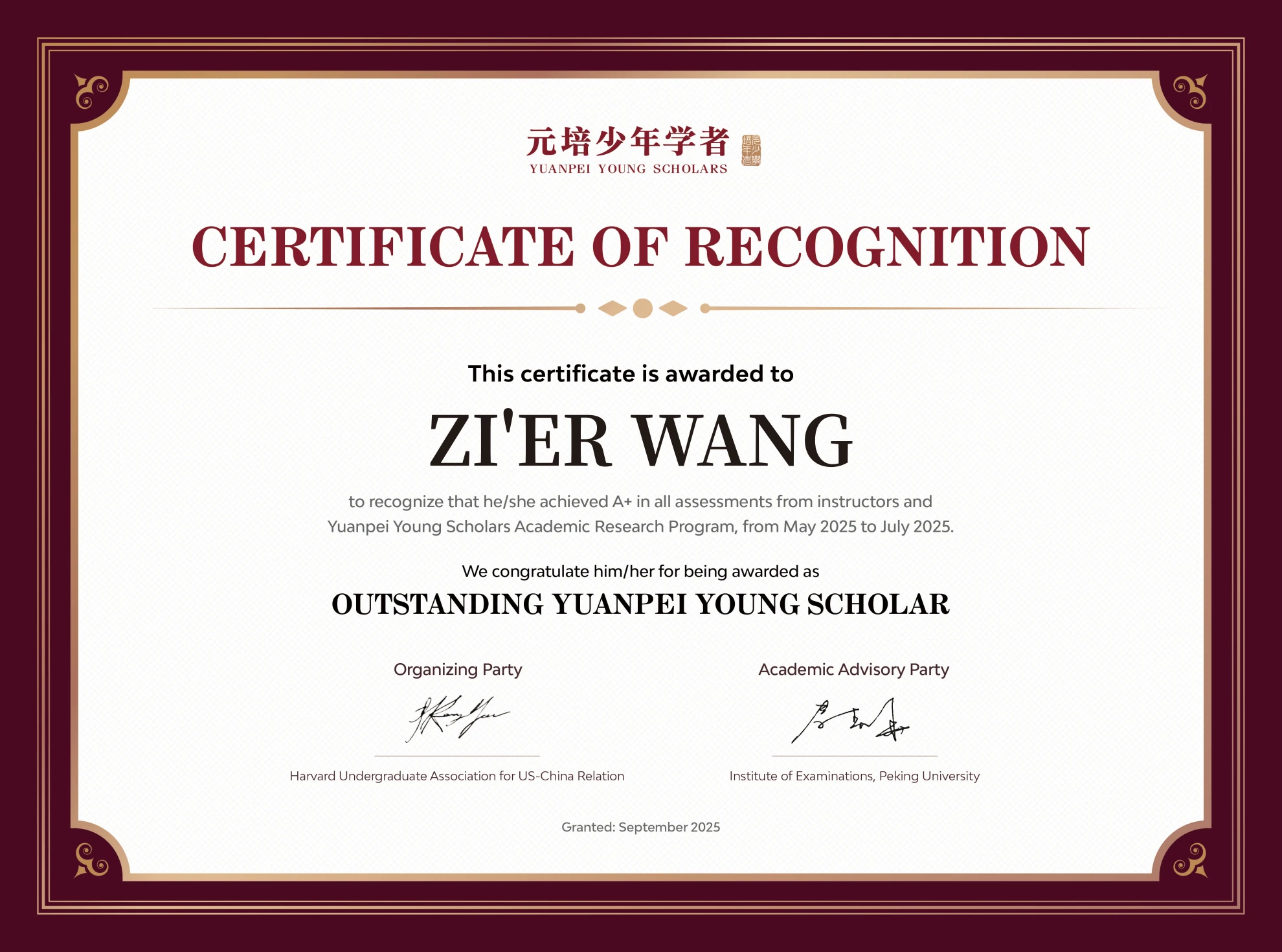
Outstanding Yuanpei
Young Scholar
A+ in all assessments
May–July 2025 · Awarded September 2025
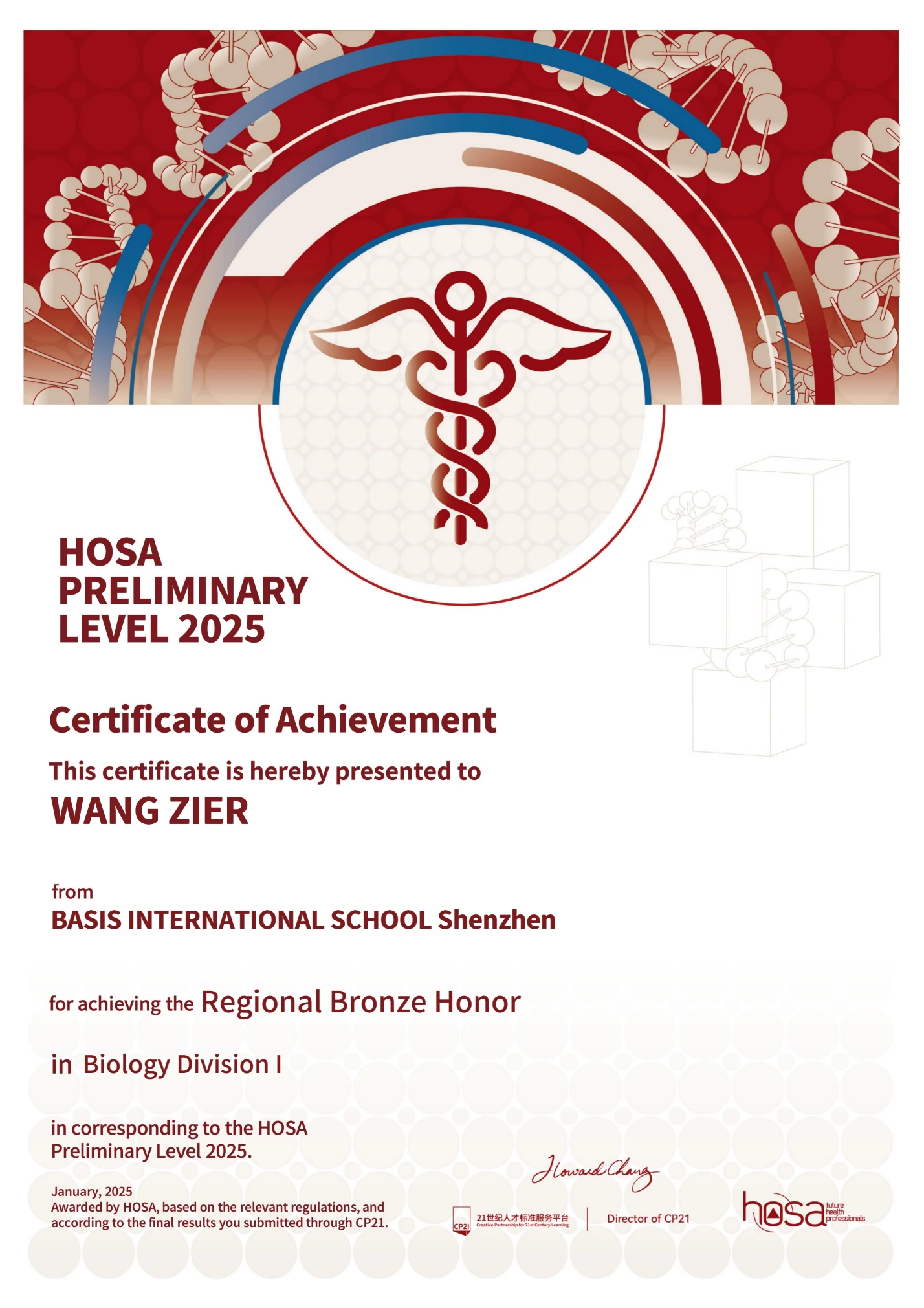
HOSA Regional
Bronze Honor
Biology Division I
Preliminary Level 2025
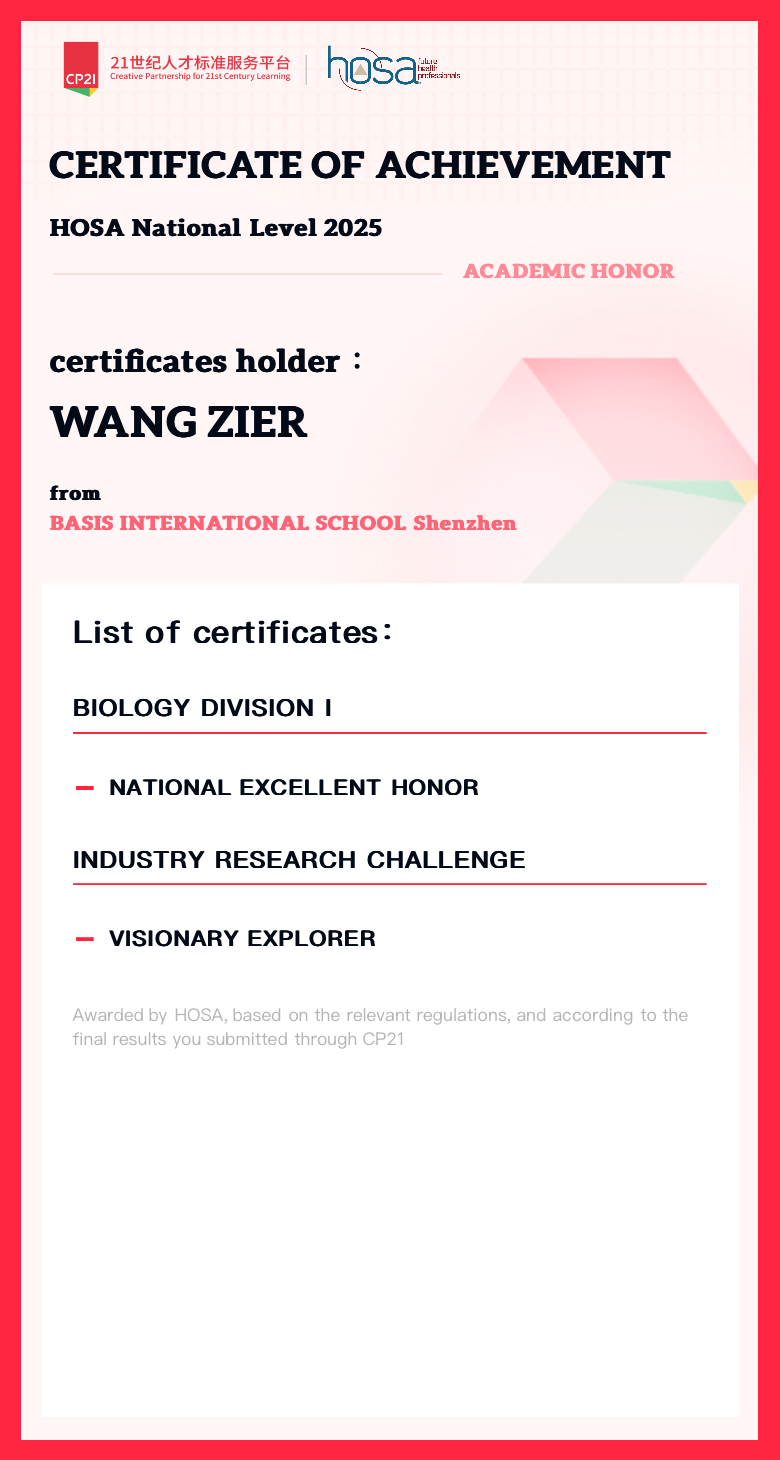
HOSA National
Academic Honors
Biology Division I · National Excellent Honor
Industry Research Challenge · Visionary Explorer
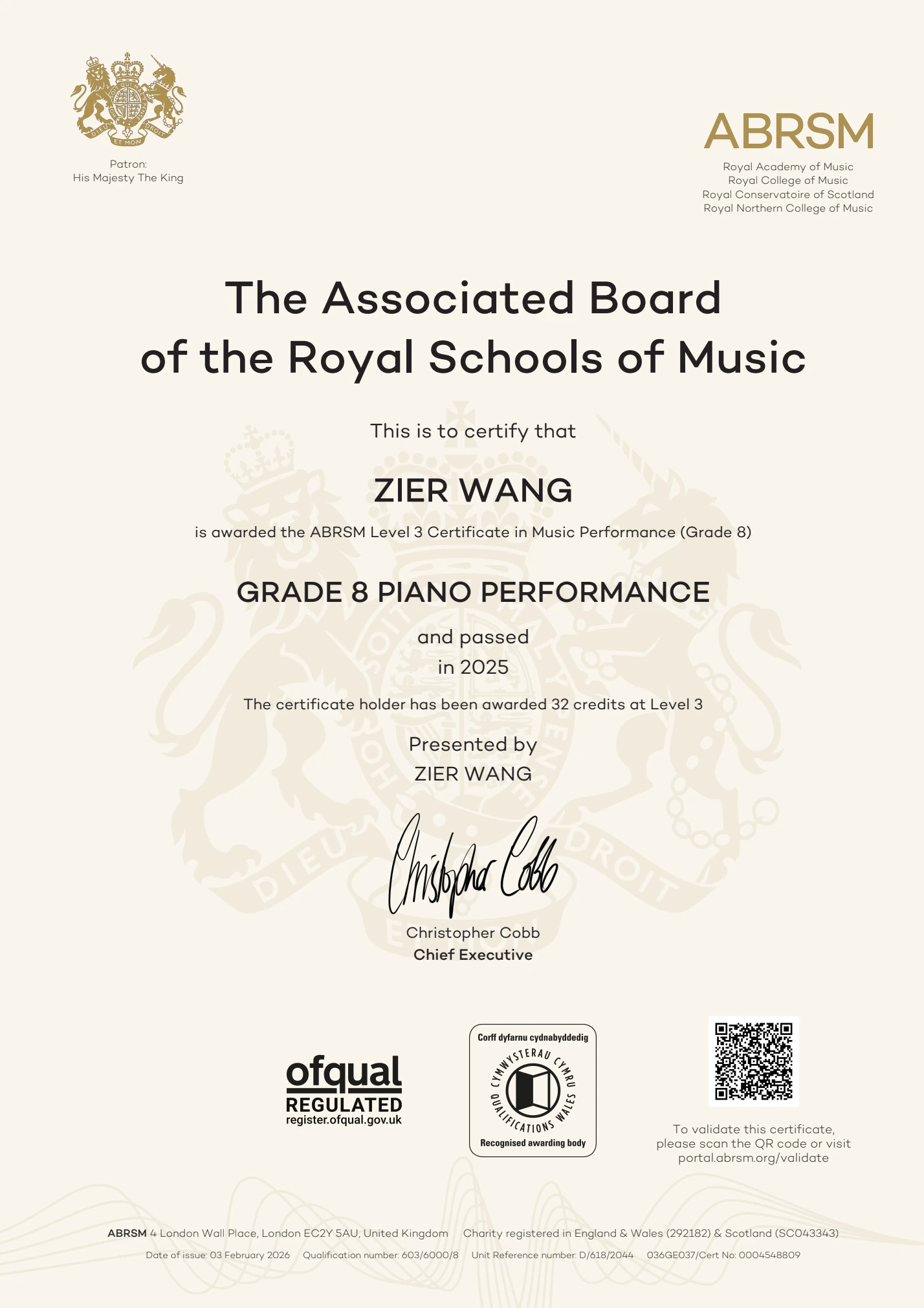
ABRSM Grade 8
Piano Performance
Passed in 2025 · Level 3 certificate
Issued 3 February 2026
NEXT CHAPTER / ATHLETICS & MINDSET
The body has
questions, too.
How movement, uncertainty, and teamwork shape the way I think.
Explore athletics & mindsetZier Wang.
The story is still unfolding.
A PERSONAL JOURNAL OF GROWTH & DISCOVERY
© Zier Wang 2026